Strikes on Russian Refineries: Why 30% Destroyed Capacity is Not Enough to Collapse Russia's Economy
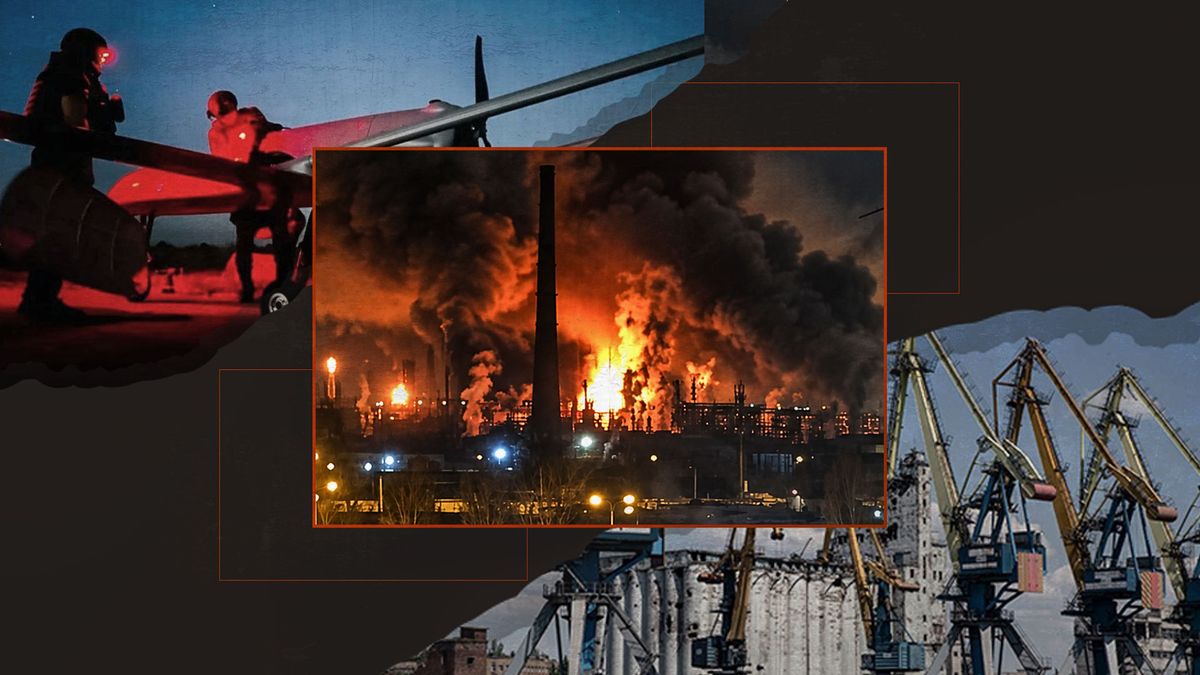
The destruction of one-third of Russia's oil refining capacity is only the beginning of a long-term strategy to exhaust the aggressor's economy. To achieve a critical fuel deficit, at least 66% of such facilities must be disabled.
 🧠AI Analysis
Photo: 24tv.ua
Key points
- Around 30% of Russian oil refining has been destroyed
- Soviet safety margin requires disabling 66% of capacity
- New tactics involve massive use of decoy drones to exhaust air defense
Ongoing attacks on Russian oil refineries create the illusion of an imminent economic collapse of the aggressor. Despite impressive footage of fires and official data on the decommissioning of a significant portion of major refineries, experts note that Russia's fuel sector retains a substantial safety margin. The threefold capacity redundancy laid down by Soviet engineers allows the country to operate only a third of its plants, which is still enough to minimally supply domestic needs and the occupying army.
New Logistics and Expanding Targets
Faced with the shutdown of several facilities, Russia's oil and gas sector is forced to radically change its logistics. Excess crude oil is being massively pumped into buffer tanks and linear stations, particularly in Samara and the port of Azov. This has turned storage facilities and logistics hubs into priority targets for Ukrainian drones. Successful strikes on such assets inflict colossal one-time losses and disrupt the supply lines of occupation forces in the southern direction.
“Russia has a huge margin of safety, so current successes are only the first stage of a long campaign,” experts point out.
The effectiveness of Ukrainian strikes is ensured by a new tactic aimed at exhausting the enemy's air defense. Using a large number of decoy drones helps overwhelm anti-aircraft systems and Russian fighter aviation, clearing the path for combat drones equipped with machine vision systems. According to specialists, maintaining the current attack intensity for at least another year and a half is necessary to reach a critical tipping point and cause serious stagnation in the Russian economy.
Source 24tv.ua — 24tv.ua/koli-rosiyska-ekonomika-vpade-chomu-udariv-po-npz-dosi-nedostat… ↗
Read next
 🏢Бізнес
Saving a Water-Damaged Smartphone: 4 Mistakes to Avoid
Experts debunk common myths about drying gadgets and offer professional advice to prevent costly repairs.
 🏢Бізнес
EU spent more on Russian energy than on aid to Ukraine, European Commission data shows
Since 2022, EU member states have paid Russia more for energy imports than the total financial support provided to Ukraine.
 🏢Бізнес
SpaceX hires Washington lobbyists ahead of potential US Congressional probes
Elon Musk's aerospace company has engaged professional lobbyists to navigate upcoming Congressional scrutiny regarding Starlink operations in Ukraine.
 🏢Бізнес
Strikes on the Crimean Bridge: Economic Impact on Logistics and Shipping
Damage to the Crimean Bridge by Ukrainian missiles creates significant logistical hurdles for the Russian Federation and disrupts maritime trade.
 🏢Бізнес
EU to Provide €1 Billion for Military Equipment for Ukraine
The Council of the European Union has approved a new military aid package via the European Peace Facility to strengthen Ukraine's defense capabilities.
 🏢Бізнес
Russian strike destroys Fresh Production Group's film studio
On the night of November 20, a Russian attack completely destroyed the filming studio of a prominent Ukrainian production company. No casualties were reported.