Strike on Kerch Bridge Paralyzes Russian Maritime Transit and Military Supply Lines
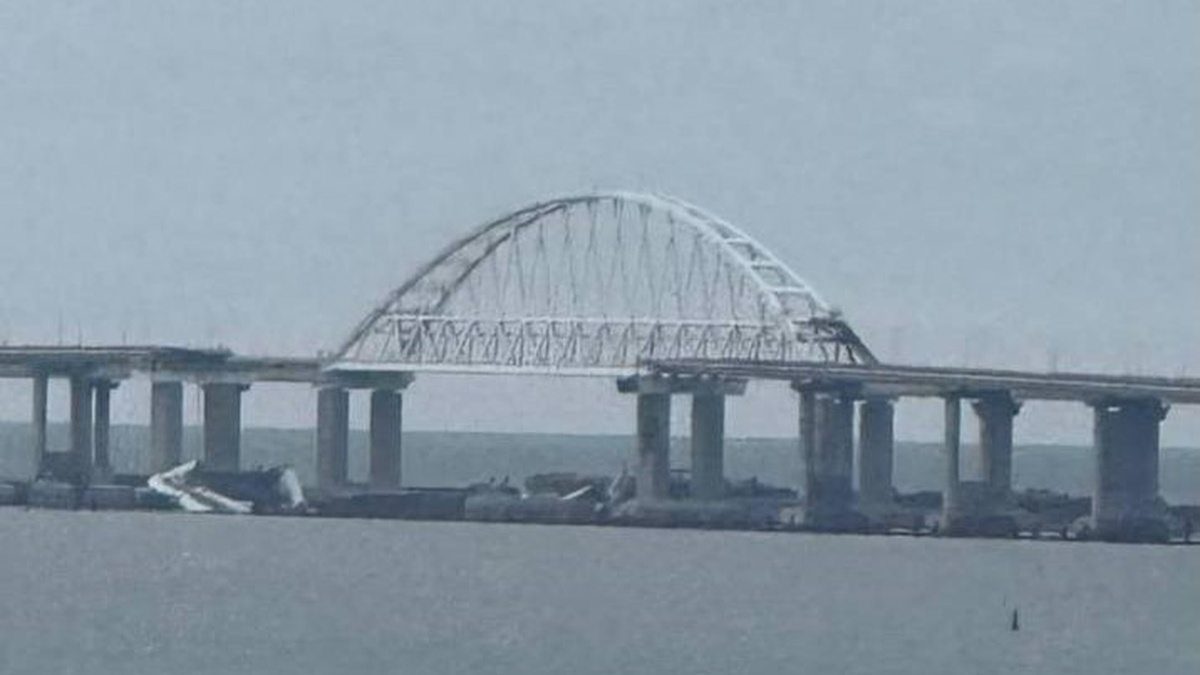
The collapse of a roadway span into the Kerch Strait has blocked the narrow Kerch-Yenikale Canal, halting Russian exports of grain and oil products while disrupting military supply channels.
 🧠AI Analysis
Photo: Інтерфакс-Україна: загальні
Key points
- Collapse of the road span blocked the 120-meter-wide Kerch-Yenikale shipping channel.
- River-sea vessel export traffic for grain and oil products from the Volga-Don regions is halted.
- Russian Railways lacks the capacity to absorb diverted maritime cargo flows.
Overnight on November 17, a targeted strike on the illegally constructed Kerch Strait bridge resulted in a road section collapsing into the water, causing severe long-term disruptions to regional maritime navigation. The General Staff of the Armed Forces of Ukraine confirmed the destruction of the bridge span, identifying the structure as a primary logistics artery supplying fuel, ammunition, armor, and military personnel to occupied Crimea and southern Ukraine.
President Volodymyr Zelenskyy stated that the strike served as a direct response to continuous Russian attacks on Ukrainian infrastructure, including critical bridge crossings in Zaporizhzhia, Dnipro, Kyiv, and the Odesa region.
Economic Shock and Maritime Logistics Bottlenecks
According to Mykhailo Honchar, President of the Strategy XXI Centre for Global Studies, the primary fallout stems from the dysfunction of the Kerch-Yenikale Canal. While the strait spans 4.5 kilometers at its narrowest point, the navigable shipping channel is merely 120 meters wide, meaning submerged debris at this location effectively blocks river-sea class vessels.
Consequently, operations across Sea of Azov ports as well as inland river ports along the Don and Volga rivers face indefinite obstruction. This route previously handled significant export volumes of petroleum products from the Middle Volga and Kama regions, alongside agricultural commodities bound for foreign markets. Diverting these volumes to Russian Railways (RZD) is unfeasible due to acute network capacity constraints.
Furthermore, the maritime blockade prevents the redeployment of smaller naval vessels and cutters between the Black Sea Fleet base in Novorossiysk and the Caspian Flotilla, diminishing Russia's tactical mobility across both basins.
Source Інтерфакс-Україна: загальні — interfax.com.ua/news/general/1237846.html ↗
Read next
 🏢Бізнес
Saving a Water-Damaged Smartphone: 4 Mistakes to Avoid
Experts debunk common myths about drying gadgets and offer professional advice to prevent costly repairs.
 🏢Бізнес
EU spent more on Russian energy than on aid to Ukraine, European Commission data shows
Since 2022, EU member states have paid Russia more for energy imports than the total financial support provided to Ukraine.
 🏢Бізнес
SpaceX hires Washington lobbyists ahead of potential US Congressional probes
Elon Musk's aerospace company has engaged professional lobbyists to navigate upcoming Congressional scrutiny regarding Starlink operations in Ukraine.
 🏢Бізнес
Strikes on the Crimean Bridge: Economic Impact on Logistics and Shipping
Damage to the Crimean Bridge by Ukrainian missiles creates significant logistical hurdles for the Russian Federation and disrupts maritime trade.
 🏢Бізнес
EU to Provide €1 Billion for Military Equipment for Ukraine
The Council of the European Union has approved a new military aid package via the European Peace Facility to strengthen Ukraine's defense capabilities.
 🏢Бізнес
Russian strike destroys Fresh Production Group's film studio
On the night of November 20, a Russian attack completely destroyed the filming studio of a prominent Ukrainian production company. No casualties were reported.