Iskander Missile Accuracy and Infrastructure Risks: Expert Analysis
The real accuracy of Russian Iskander-M ballistic missiles is 5–7 meters, enabling precise attacks on critical energy and logistics infrastructure.
 🏢Бізнес
Photo: unian.ua
Key points
- Real Iskander-M accuracy is 5–7 meters, debunking the 1-meter myth.
- Radar-based terminal guidance is expensive but effective in all weather.
- Passive defenses like smoke and chaff can disrupt missile targeting.
- Patriot systems remain the primary tool for intercepting these ballistic threats.
The precision of Russian missile weaponry remains a key factor in assessing risks to the Ukrainian economy and infrastructure. Aviation expert Valeriy Romanenko, in a comment to UNIAN, debunked myths about the ultra-high precision of Iskander-M ballistic missiles, stating that claims of "plus-minus one meter" accuracy are technically impossible due to the missile's immense speed.
Technical Limits and Real Figures
According to the expert, while the system was designed to be high-precision, its real circular error probable (CEP) ranges from 5 to 7 meters. In military terms, a hit within this range is considered a direct strike. "To say they will hit a 10-hryvnia coin is unlikely," Romanenko emphasized, adding that while electronics development improves accuracy, it has physical limits.
To achieve such results, these missiles use terminal guidance systems. There are two main types: optoelectronic, which compares the terrain with a reference image in the computer's memory, and radar-based. The latter is significantly more expensive but allows the missile to operate effectively in any weather conditions, making it a more dangerous threat to stationary targets.
Impact on Infrastructure and Defense Strategies
The expert explained that for large targets like power plants, missiles can rely on inertial navigation using coordinates. However, when targeting smaller objects such as bridges, homing heads become essential. Terminal correction, which occurs in the final seconds of flight, allows the missile to reach the 5–7 meter precision threshold.
Regarding countermeasures, Romanenko noted that Patriot missile systems remain the primary defense. However, passive defense measures like smoke screens and radar interference are also effective.
"One can easily deploy smoke screens or use radar chaff—finely cut wire can create a curtain for several minutes,"the expert stated, explaining that such measures can make a target "invisible" to the missile's onboard radar, forcing it to rely on less accurate inertial systems.
Source unian.ua — unian.ua/war/tochnist-raketi-iskander-m-chomu-5-7-metriv-uzhe-vvazh… ↗
Read next
 🧠AI Analysis
Geopolitical summit in China: expert assessment of the meeting between US, Chinese, and Russian leaders
Political scientist Ramiz Yunus analyzed the summit in Shenzhen, describing it as a media-driven event rather than a strategic diplomatic breakthrough.
 🏢Бізнес
EU to Provide €1 Billion for Military Equipment for Ukraine
The Council of the European Union has approved a new military aid package via the European Peace Facility to strengthen Ukraine's defense capabilities.
 🧠AI Analysis
Technological Superiority and the Crimean Bridge: Expert Analysis
Recent attacks on the Crimean Bridge demonstrate Ukraine's shift toward the systematic, industrial-scale deployment of high-tech military solutions.
 🧠AI Analysis
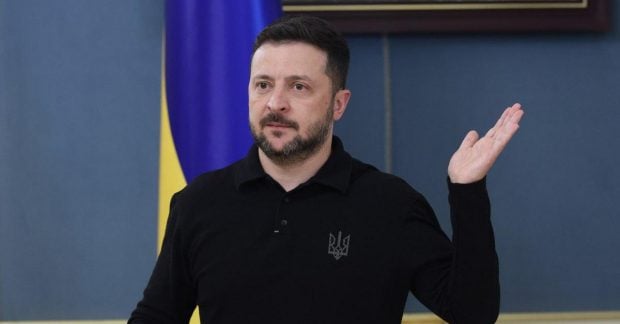
Zelenskyy Reaffirms Legitimacy of Strikes on Crimean Bridge
The President of Ukraine confirmed the strategic importance of disabling the Crimean Bridge as a legitimate military target in response to Russian aggression.
 🏢Бізнес
Russian strike destroys Fresh Production Group's film studio
On the night of November 20, a Russian attack completely destroyed the filming studio of a prominent Ukrainian production company. No casualties were reported.
 🏢Бізнес
Energy infrastructure in Rivne region damaged by attack: 50 settlements left without power
Following a hostile strike on the Sarny district of the Rivne region, 50 settlements have lost electricity, with repair efforts hindered by ongoing security alerts.