History of Kyiv's Ginzburg Skyscraper: From Architectural Gem to Destruction
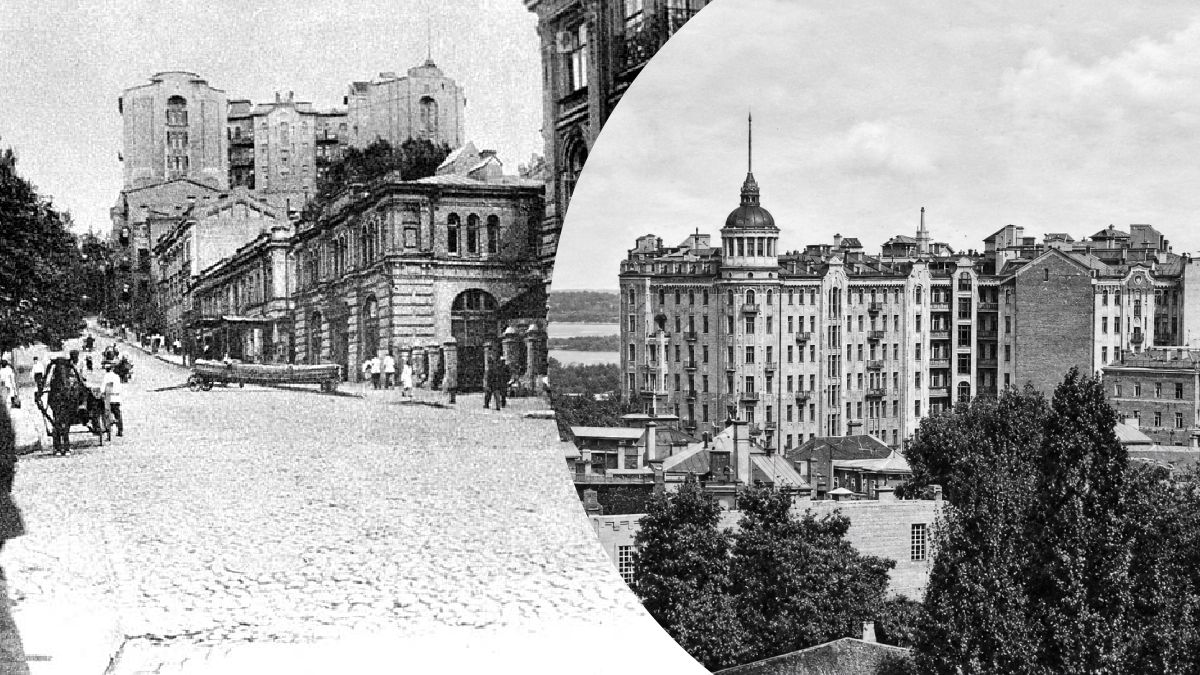
In the early 20th century, Kyiv built the Ginzburg House, which became the tallest building in the empire and the Soviet state before being destroyed during WWII.
 🏢Бізнес
Photo: 24tv.ua
Key points
- The Ginzburg House was built in Kyiv between 1910 and 1912 by architects Minkus and Troupiansky.
- The building reached 67.5 meters with its spire, holding the title of tallest in the empire and the USSR.
- The structure was destroyed when Soviet forces blew up central Kyiv in September 1941.
At the beginning of the last century, the Ukrainian capital experienced a massive construction boom, symbolized by the legendary Ginzburg House. Contractor and merchant Lev Ginzburg purchased several plots on Instytutska Street, where construction of a unique multi-story apartment building began in 1910. The project was designed by architects Adolf Minkus and Fedir Troupiansky, and the construction was carried out by Ginzburg's own firm.
Engineering Innovations and Construction Scale
The building struck contemporaries with its technical solutions and Art Nouveau architecture, costing one and a half million rubles. Due to the complex terrain and elevation differences, the structure varied in height: from eight to nine floors on the Instytutska side, to eleven floors facing Khreshchatyk and Mykolaivska Street (now Horodetskoho). The total height of the skyscraper reached 53 meters, and with the spire, it extended to 67.5 meters, making it the tallest building not only in the city but across the entire Russian Empire at the time.
Inside, there were 94 apartments comprising about 500 rooms, ground-floor retail shops, and advanced American elevators by Otis, which were a novelty in Kyiv. Following the establishment of Soviet rule, the property was nationalized, converting elite apartments into communal housing. Until the late 1920s, the Ginzburg skyscraper held the status of the tallest structure in the USSR, and until 1941, in Ukraine.
Tragic Finale of the Historic Structure
The skyscraper's history ended abruptly during World War II due to Soviet scorched-earth tactics. In the autumn of 1941, during the retreat from Kyiv, the building and several other structures on Khreshchatyk were mined and blown up by engineering units of the 37th Soviet Army and the NKVD. The remaining ruins were finally cleared in the 1950s, and the Ukraine Hotel was later built on the site.
Source 24tv.ua — 24tv.ua/dim-ginzburga-istoriya-pershogo-hmarochosa-ukrayini-chomu-yogo_… ↗
Read next
 🧠AI Analysis
Geopolitical summit in China: expert assessment of the meeting between US, Chinese, and Russian leaders
Political scientist Ramiz Yunus analyzed the summit in Shenzhen, describing it as a media-driven event rather than a strategic diplomatic breakthrough.
 🏢Бізнес
EU to Provide €1 Billion for Military Equipment for Ukraine
The Council of the European Union has approved a new military aid package via the European Peace Facility to strengthen Ukraine's defense capabilities.
 🧠AI Analysis
Technological Superiority and the Crimean Bridge: Expert Analysis
Recent attacks on the Crimean Bridge demonstrate Ukraine's shift toward the systematic, industrial-scale deployment of high-tech military solutions.
 🧠AI Analysis
Zelenskyy Reaffirms Legitimacy of Strikes on Crimean Bridge
The President of Ukraine confirmed the strategic importance of disabling the Crimean Bridge as a legitimate military target in response to Russian aggression.
 🏢Бізнес
Russian strike destroys Fresh Production Group's film studio
On the night of November 20, a Russian attack completely destroyed the filming studio of a prominent Ukrainian production company. No casualties were reported.
 🏢Бізнес
Energy infrastructure in Rivne region damaged by attack: 50 settlements left without power
Following a hostile strike on the Sarny district of the Rivne region, 50 settlements have lost electricity, with repair efforts hindered by ongoing security alerts.