Digital Overconfidence as a Major Vulnerability: How Ukrainians Can Protect Themselves from Cyber Fraud
Research indicates that over half of Ukrainians overestimate their cybersecurity skills, making them easy targets for scammers. Experts emphasize the need for continuous learning due to the rapid evolution of technology.
 🏢Бізнес
Photo: rbc.ua
Key points
- 55% of people believe they do not need digital literacy training
- 80% of social engineering attacks use artificial intelligence
- 67% of users experienced security issues during the year
In today's digital landscape, confidence in one's own knowledge has become a primary risk factor. According to Ruslana Korenchuk, CEO of Diia.Education, 55% of Ukrainians who do not seek to improve their digital literacy justify it by claiming they already know everything. However, statistics suggest otherwise: 67% of users encountered phishing or hacked accounts within the past year, and one in four takes no measures to secure their data at all.
New Threats in the Era of AI
The internet environment changes faster than user habits. While scammers were once easily identified by typos, today over 80% of social engineering attacks utilize artificial intelligence. Criminals have learned to masterfully mimic voices and create personalized messages that appear to come from family or friends.
- 44% of Ukrainians received requests for money from compromised accounts of friends or acquaintances.
- 42% of adult Ukrainians use AI, yet one-third have noticed the technology fabricating facts.
- Only one-third of users feel safe online.
To address these challenges, experts advise maintaining a critical mindset and avoiding automatic decisions when handling financial or personal data. As part of the Diia.Education initiative, an educational series has been launched to help users recognize common traps that even experienced individuals fall into.
Source rbc.ua — rbc.ua/ukr/news/naynebezpechnishe-interneti-upevnenist-shcho-179515… ↗
Read next
 🧠AI Analysis
Geopolitical summit in China: expert assessment of the meeting between US, Chinese, and Russian leaders
Political scientist Ramiz Yunus analyzed the summit in Shenzhen, describing it as a media-driven event rather than a strategic diplomatic breakthrough.
 🏢Бізнес
EU to Provide €1 Billion for Military Equipment for Ukraine
The Council of the European Union has approved a new military aid package via the European Peace Facility to strengthen Ukraine's defense capabilities.
 🧠AI Analysis
Technological Superiority and the Crimean Bridge: Expert Analysis
Recent attacks on the Crimean Bridge demonstrate Ukraine's shift toward the systematic, industrial-scale deployment of high-tech military solutions.
 🧠AI Analysis
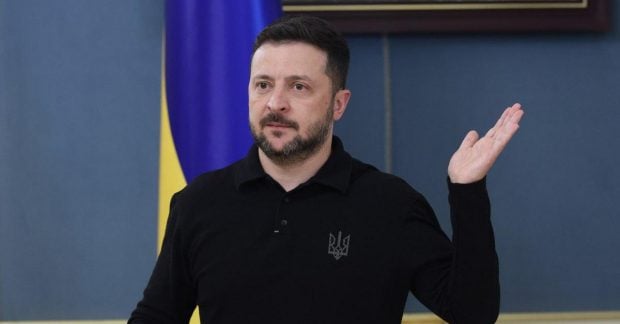
Zelenskyy Reaffirms Legitimacy of Strikes on Crimean Bridge
The President of Ukraine confirmed the strategic importance of disabling the Crimean Bridge as a legitimate military target in response to Russian aggression.
 🏢Бізнес
Russian strike destroys Fresh Production Group's film studio
On the night of November 20, a Russian attack completely destroyed the filming studio of a prominent Ukrainian production company. No casualties were reported.
 🏢Бізнес
Energy infrastructure in Rivne region damaged by attack: 50 settlements left without power
Following a hostile strike on the Sarny district of the Rivne region, 50 settlements have lost electricity, with repair efforts hindered by ongoing security alerts.