Fico's Government Loses Majority: Political Instability Hits Slovakia
Slovak PM Robert Fico's coalition now holds only 75 out of 150 seats, forcing the government into a fragile minority position.
 🏢Бізнес
Photo: biz.liga.net
Key points
- Fico's coalition dropped to 75 seats, losing the 76-seat majority threshold.
- Former ally Tomáš Taraba is leveraging his group's votes for political gain.
- The failure of the November 11 judicial vote signals a new era of minority governance.
Slovak Prime Minister Robert Fico has officially lost his parliamentary majority, leaving his government in a vulnerable position. Following the departure of three MPs from the ruling bloc, the coalition now controls only 75 seats in the 150-member parliament. This shift transforms the legislative process into a series of constant negotiations with independent lawmakers and former allies.
The Defectors and the First Failure
The crisis was triggered by the exit of Roman Malatinec, Peter Sliško, and Tomáš Taraba. Taraba, a former environment minister, is now establishing his own political platform, effectively holding the government's agenda hostage. The first major blow occurred on November 11, when the parliament rejected crucial amendments to the Criminal Procedure Code. These changes were a priority for Fico's Smer party, particularly regarding high-profile legal cases.
However, analysts suggest that this does not mean the immediate end of Fico's premiership. In Slovakia, ordinary laws can be passed by a simple majority of those present, provided there is a quorum. "The coalition is indeed vulnerable, but the politicians challenging Fico still have strong reasons to keep his government in power," explains Rastislav Kužel, director of MEMO 98. This suggests a period of "transactional politics" where votes are traded for influence.
Impact on Governance and Economy
The loss of a guaranteed majority introduces significant uncertainty for Slovakia's business environment. Small groups of MPs can now leverage their positions to demand appointments in state institutions or influence over public resources. This dynamic threatens the predictability of fiscal policy and could stall necessary economic reforms as the government focuses on political survival rather than long-term growth.
Source biz.liga.net — liga.net/politics/articles/fitso-poteryal-bolshinstvo-no-ne-vlast-k… ↗
Read next
 🧠AI Analysis
Geopolitical summit in China: expert assessment of the meeting between US, Chinese, and Russian leaders
Political scientist Ramiz Yunus analyzed the summit in Shenzhen, describing it as a media-driven event rather than a strategic diplomatic breakthrough.
 🏢Бізнес
EU to Provide €1 Billion for Military Equipment for Ukraine
The Council of the European Union has approved a new military aid package via the European Peace Facility to strengthen Ukraine's defense capabilities.
 🧠AI Analysis
Technological Superiority and the Crimean Bridge: Expert Analysis
Recent attacks on the Crimean Bridge demonstrate Ukraine's shift toward the systematic, industrial-scale deployment of high-tech military solutions.
 🧠AI Analysis
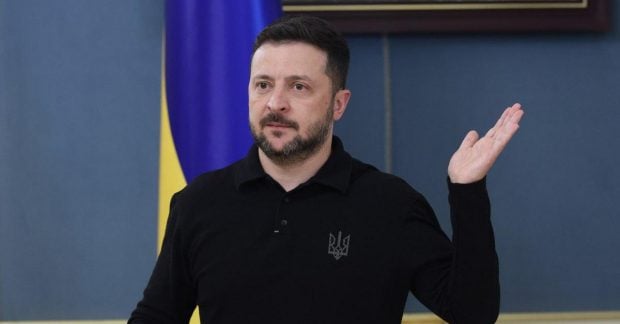
Zelenskyy Reaffirms Legitimacy of Strikes on Crimean Bridge
The President of Ukraine confirmed the strategic importance of disabling the Crimean Bridge as a legitimate military target in response to Russian aggression.
 🏢Бізнес
Russian strike destroys Fresh Production Group's film studio
On the night of November 20, a Russian attack completely destroyed the filming studio of a prominent Ukrainian production company. No casualties were reported.
 🏢Бізнес
Energy infrastructure in Rivne region damaged by attack: 50 settlements left without power
Following a hostile strike on the Sarny district of the Rivne region, 50 settlements have lost electricity, with repair efforts hindered by ongoing security alerts.